Debunking the Nordic Fairy Tale - Unraveling the Beautiful Illusion of “High Welfare"
Author: Boss Gu, Mr. Y, translator: Mr. Y
Introduction: A Perfect Product That Captivates the World
Let me ask you a question.
If you were to immigrate now, disregarding details like language and climate, and only considering one thing - going to a "good country" - where would you choose?

Colorful Houses in Bryggen in Bergen City in Norway
I bet, nine out of ten, you will choose one of the Nordic countries: Denmark, Sweden, Norway and Finland. This is practically muscle memory of our generation. When you hear labels like "the ceiling of human civilization", "ideal country", or "happy society", the names of these Nordic countries are the first to come to mind.
The reason is simple - what's presented to us is a near-perfect Garden of Eden:
1. Cradle-to-grave welfare. From birth, the state provides financial support; kindergarten to university is essentially free; illness is covered by the state; unemployment is met with substantial welfare benefits; mothers enjoy more than a year of paid maternity leave; and old age is ensured by a pension for their later years with dignity. This isn't just a state; it's practically a lifelong, all-encompassing "super nanny", smoothing out all the major hurdles in your life.

Cradle-to-grave welfare
2. No.1 in the world happiness index. In the UN's annual happiness rankings, the Nordic countries have consistently topped the list. Nordic people are "officially" certified as "happy citizens".

3. No.1 in Corruption Perceptions Index. The government is transparent, and officials are not corrupt. Society enjoys high trust. If you leave your wallet in a coffee shop, you'll most likely find it back in the same place a while later.
4. No.1 in Gender Equality. Women enjoy high status; half the parliament is composed of women. It is common to see fathers pushing strollers on the street.
By putting on these labels one by one, a perfect "paradise on earth" emerges. It fulfills all modern people's fantasies of an ideal society - wealth, equality, freedom, security, and guarantees - like a luxury display in a shop window, brightly lit, with every piece sparkling.

stunning Christmas window display
Thus, this "Nordic fairy tale" become the spiritual totem of our time. The left was touched to tears: "Isn't this the ideal of common prosperity?" The right uses it as an argument: "See, capitalism can also be compassionate".
And what about ordinary people? They yearn for it - who wouldn't want a life with fully enclosed safety net?
The "Nordic model" has become a political "Swiss Army knife" seemingly capable of solving all the pain points of contemporary society.
However, the most interesting part often begins with the word "however".
A Fatal Question: don't you find this a bit strange?

Skeptical man
If this model truly is the ultimate answer to human societal development, then why has only a small corner of the world - five countries with a population of merely 30 million people - achieved it?
Since humans are clever, and everyone is always eager to learn the good news. Britain's Industrial Revolution were followed worldwide; the US's federal system was imitated by countless countries; China's reform and opening, creating an economic miracle over decades, is being studied by many developing countries.
Ironically, this highly praised "Nordic model" has, for over fifty years, seen virtually no one replicate it, except for the Nordic countries.
Are people in other countries not smart enough? Or not kind enough? Or lacking in execution?
It's like a student who consistently gets top marks, sharing his unique study methods with the whole class, but finding that no one else can master it. Shouldn't we then consider - is their success due to the inherent brilliance of his method, or only because his father is the exam setter?

The nature of the question has now changed.
Our past discussions about the Nordic model largely focused on its "user experience”. Wow, this app called “Nordic model” has a beautiful interface, thoughtful features, and is so user-friendly! But we rarely ask a more fundamental question: how was its “backend code" written? Is its server rented or purchased? Where do the monthly expenses come from? Would this app crash one day because it couldn’t afford the server costs?

Backend Code and Server
So, what I'm going to do is "decompile" this exquisite app - to see its underlying "source code", which is generally invisible to the public and even itself doesn't want you to see.
Chapter II: Reversed Cause and Effect - The True Source of Happiness and Trust
Let's look at "high happiness index" and "high social trust". This is the core and most dazzling halo in the Nordic fairy tale. The Danes talk about their "Hygge", a warm and comfortable philosophy of life. The Finns have the "Sisu" spirit - unwavering perseverance, everyone trusts each other, and society is harmonious.
Isn't this a positive outcome of the welfare system?
Here, we need to introduce a historical perspective.
The common narrative logic is: because the Nordic countries implemented high welfare, society is harmonious and people are happy.
But the real historical trajectory is exactly the opposite: because the Nordic people were already a unique, very wealthy society with a strong sense of cultural identity and a tradition of trust before implementing high welfare, they could "afford" this expensive experiment.
This is like saying - it's not that someone becomes rich because they ate abalone and sea cucumber at every meal, but that they were rich enough to afford luxury food at every meal.
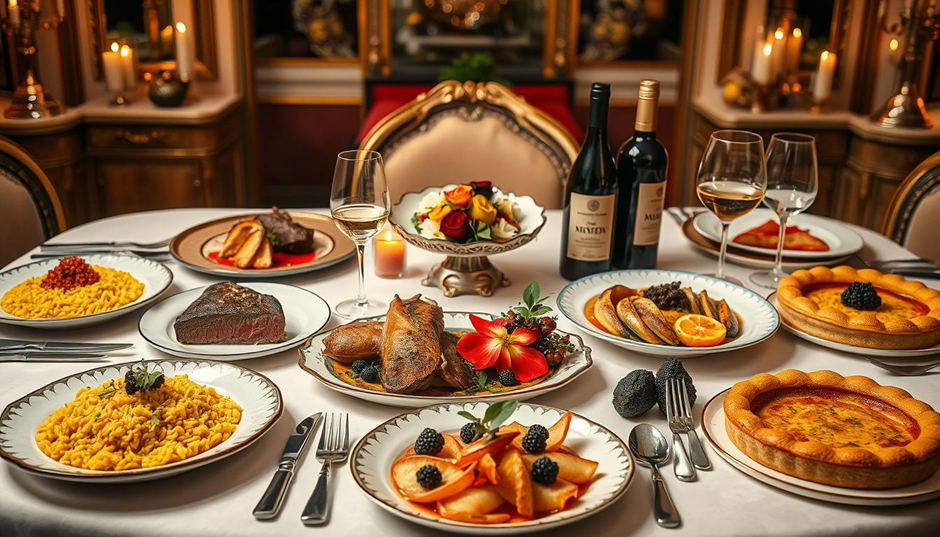
Luxury meal
This historical truth is the most crucial piece of the puzzle that storytellers of "Nordic fairy tales" have unintentionally or even deliberately ignored.
The human warmth was destroyed by the "Super Nanny"
But what is more alarming is that it is precisely this all-encompassing welfare system that has been quietly eroding the interpersonal trust and social bonds that the Nordic countries are so proud of.
So, what is true, spontaneous, traditional social trust like?
Imaging that in a small village, David's family needs to build a house, and Chris and George both come to help without pay - because they know that David will come to help their families next time when they need help. This is a network of interpersonal trust that is based on long-term, repeated interactions.

Neighborly Mutual Aid
Anyone who slacks off will be excluded next time. The same applies to families: you support your parents, and your children will supposedly support you in the future. This is a responsibility contract between generations based on blood ties and kinship.
But when the state, the "super nanny", intervenes, everything changes.
David has built a house and no longer needed his neighbors' help; he can apply for government subsidies. Chris is sick and doesn't need financial support from relatives or friends; he has national health insurance. You're old and don't rely on your children anymore but your national pension.
So, do you see the problem?
The state has replaced personalized, voluntary, community- and family-based "mutual assistance" with an impersonal, mandatory, and bureaucratic "welfare" system. The direct, warm connections between people have been replaced by a cold, impersonal connection between "people and the government". You no longer need to trust your neighbors; you only need to trust that distant, abstract "welfare system" to deposit money into your account on time.

Queues in the cold government service hall
This "trust" is more like “dependence" - like a child "trusting" their parents to feed them - a one-way, passive dependence, not the two-way trust between adults that need them to maintain.
Thus, a chilling paradox emerges: a welfare system built in the name of "collective" and "society" ultimately leads to a group of "atomized individuals" and an increasingly alienated society. Everyone pays taxes to a central machine and receives welfare benefits from it, becoming an isolated interface on this huge system. Traditional functions of neighborly relations and extended families are slowly eroded and disintegrated in this process.
Perhaps this is why, in this supposedly "happiest" place in the world, you see the highest proportion of people living alone globally, as well as a significant prevalence of depression and mental health issues. When all of life's risks are covered by the state, is the sense of meaning and value in life also emptied out?

A person living alone looks out the window
Chapter III: The Forgotten Heritage—The Golden Age of Laissez-faire
What allows the Nordic countries to afford this expensive welfare system today?
Many would immediately say: oil! Doesn't Norway have the North Sea oil fields?
That's partly true but couldn’t explain everything. Norway didn't discover oil until the 1970s, but its wealth and industrial base already established before that. More importantly, Sweden, Denmark, and Finland don't have oil deposits underground, yet they are also wealthy welfare states. Therefore, oil is icing on the cake, not the fundamental reason for their wealth.

North Sea oil platforms
The answer might surprise you.
Before the full-scale establishment of the welfare state in the mid-20th century, Northern Europe - especially Sweden - was the world's freest market, bar none. In many ways, it was No.1 in the world. The Nordic region was vastly different from today: characterized by unbridled growth, fierce competition, a burgeoning entrepreneurial spirit, and a very small government, very low taxes, and minimal intervention in the market.
How hardcore was this steampunk-style Nordic economy?
Let's go back to the mid-19th century. Sweden at that time was poor - a poor relative of rich Europe. The land was barren, the climate cold, and agriculture hopeless. Many Swedes couldn't survive and left their homes to seek a living in America. Today, Minnesota still has a large population of Swedish descent, descendants of those who migrated there.
How did the turning point come? Not through any brilliant government planning or top-level national design, but a single word: openness.
In the 1860s, the Swedish government implemented a series of reforms: it fully promoted free trade, dismantled tariff walls, and allowed the free flow of goods, capital, and technology; it liberalized the financial sector, permitting private banks; it allowed free business registration with extremely simple procedures and minimal government intervention; and it provided iron-fisted protection for private property rights - what's yours is yours, not even the king can take it away.

19th-century Nordic trading ports
How effective were these measures? Immediately.
With minimal government intervention, low taxes, and strict property protection, what would capitalists and individuals do? They flocked in. Capital and technology from across Europe poured into Sweden. Swedes themselves also unleashed astonishing creativity and capacity.
Those Swedish brands we know so well today, are they products of the welfare state?
No! Almost all of them were born in that golden age of laissez-faire:
• Ericsson, founded in 1876, started as a small telegraph repair shop.
• Atlas Copco, a leading global industrial group, founded in 1873.
• SKF bearings, founded in 1907, revolutionized the world's machinery industry. 20 years later, in 1927, Volvo Cars was established as its subsidiary.
• Electrolux, a home appliance giant, was founded in 1919.
• Tetra Pak packaging: founded in 1951, its founder Rubin Rausch grew up under the influence of the spirit of that era.

Looking at other three Nordic countries, the above pattern not only roughly matches, but is so precise that it's like a bug. I asked AI to list the giants and their birth year in these countries. Almost all the world-renowned Nordic brands, like Nokia, Freescale, Kone, etc., were founded in the 1970s, before the establishment of high-welfare societies. Only two giants on the list were founded after that time. One is the game company Supercell, which is the subsidiary of Tencent now, so strictly speaking, it is no longer a Nordic company. The other is Ørsted, a Danish state-owned enterprise that started with oil, suffered financial losses in 2023.
In contrast, there were about 30 to 40% of the Fortune Global 500 companies founded after the 1970s. The seven most valuable companies on Nasdaq were all founded after 1975.
NO Norway

FI Finland

DK Denmark
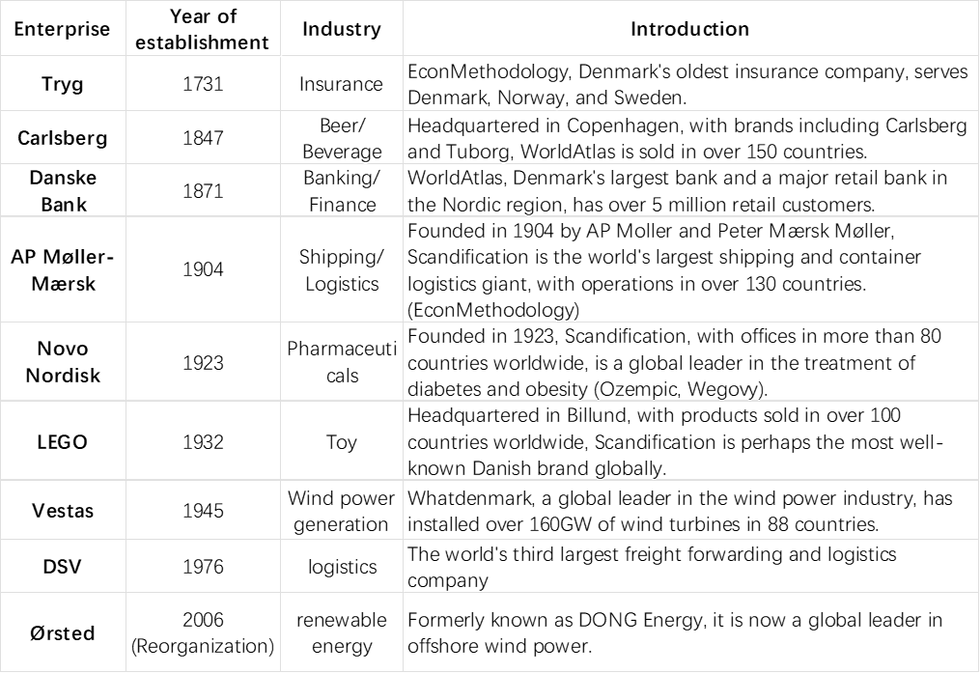
The free market is so powerful in business and economics that it's like physical law, which is truly impressive.
Here's something that might blow your mind.
Every single one of these iconic Nordic companies - Ericsson, Volvo, SKF, Electrolux, Nokia, Maersk, LEGO, Carlsberg - every single one of them was born in the age of laissez-faire capitalism. Not the welfare state, before it.
These weren't soft, subsidized startups nursed by government grants. No. These were hardcore manufacturing and engineering titans - forged in the fire of brutal, unforgiving market competition. No safety net. No bailouts. Just survive or die.
And survive they did.
From 1870 to 1950 - that's eighty years - Sweden's economic growth rate was the highest in the world. Let that sink in. The. Highest. In the world. A freezing, dirt-poor agricultural backwater... transformed into one of the wealthiest, most industrialized nations in Europe.
So, what was the government doing during this miracle?
Almost nothing.
Seriously. The Swedish government back then was what political scientists call a "night watchman". Its job responsibilities had three items - and only three: keep the peace, enforce contracts fairly, and protect people's property. That was it. Full stop.
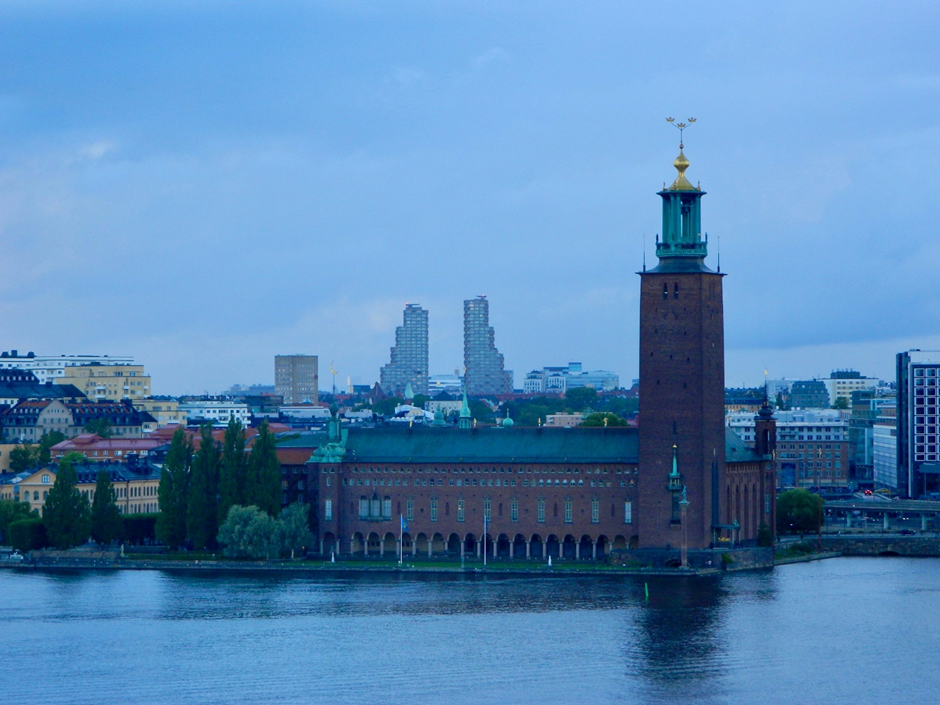
Swedish government building, Stockolm, Sweden
Government spending? Below ten percent of GDP. For decades.
Now - let me put that in perspective. The US government today spends about thirty-four percent. And modern Sweden? A whopping fifty percent. But back in its golden age? Under ten. The government was barely there.
And here's the thing nobody tells you about that era. There was no welfare. None of it. You got sick? You bought yourself insurance - or your family helped, or your church. You lost your job? Tough luck. You found another one. Nobody was gonna carry you. University? That was for the elite - and yes, you had to pay tuition.
Sounds harsh, right? Maybe even cruel?
But - and this is the crucial "but" - it was precisely this harshness that forged an entire nation's survival instinct. Every single person knew, deep in their bones: I am responsible for my own life. Not the state. Not the system. Me.

A hard-working farmer
The whole society was like a high-intensity gym. Everyone was in there, sweating, grinding, building muscle. Economic muscle. And spiritual muscle.
Think about it. What comes to mind when you picture a Scandinavian? Honest. Hardworking. Frugal. Reliable. Plays by the rules. Right? Those aren't random traits. They're etched into the cultural DNA - and they trace back centuries, to the Protestant work ethic. The idea that work isn't just a way to earn money. Work is a calling. A sacred duty. You do your absolute best - not for a bonus, not for a promotion - but to honor something bigger than yourself.

Forging the spirit like blacksmithing
Now - take that spirit. Put it in a completely free market. Low taxes. Ironclad property rights. Zero government interference.
What do you get?
You get an economic miracle. That's what you get.
In that era, Swedish entrepreneurs and workers were probably the most driven people on the planet. A handshake meant something. A signed contract was gospel. Bosses trusted workers to show up and deliver. Workers trusted their boss to pay the salary owed to them. Transaction costs across the entire society were rock bottom.
That - that trust, that ethic, that culture - was the most valuable inheritance the Nordic countries ever received. More valuable than oil. More valuable than any sovereign wealth fund.
So, let's take stock. Two ancestral fortunes, clearly identified.
The first: material capital. A powerful industrial base. World-class companies. A wealthy, productive population.
The second - and this one is harder to see but even more important: cultural capital. A national character built on honesty, diligence, self-reliance, and deep social trust.
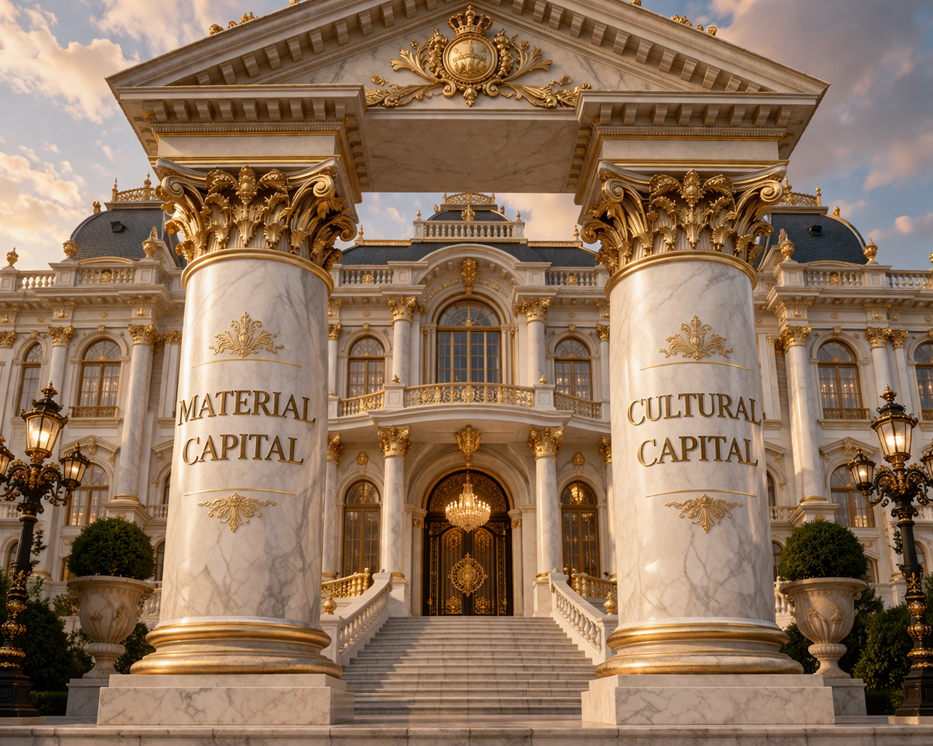
The affluent Nordic society is composed of two pillars: material capital and cultural capital
And here - right here - is the secret that the storytellers of the Nordic fairytale least want you to know:
Nordic wealth is not the result of high welfare.
It's the other way around.
High welfare was built on top of the enormous wealth and industrial muscle accumulated in the pre-welfare era. They got rich first. Then they started figuring out how to spend it.
You cannot - cannot - watch a trust-fund kid throwing parties every weekend and conclude that partying is the secret to getting rich. That's not how causation works. But that's exactly the logical error the world has been making about Scandinavia for fifty years.

Rich 2nd generation luxury party
CHAPTER IV - THE VIRUS OUTBREAK
After World War II, something shifted across the entire Western world. The pendulum swung left. Keynesianism was the new religion. And in the Nordic countries, Social Democratic parties grabbed the reins - and held them for decades.
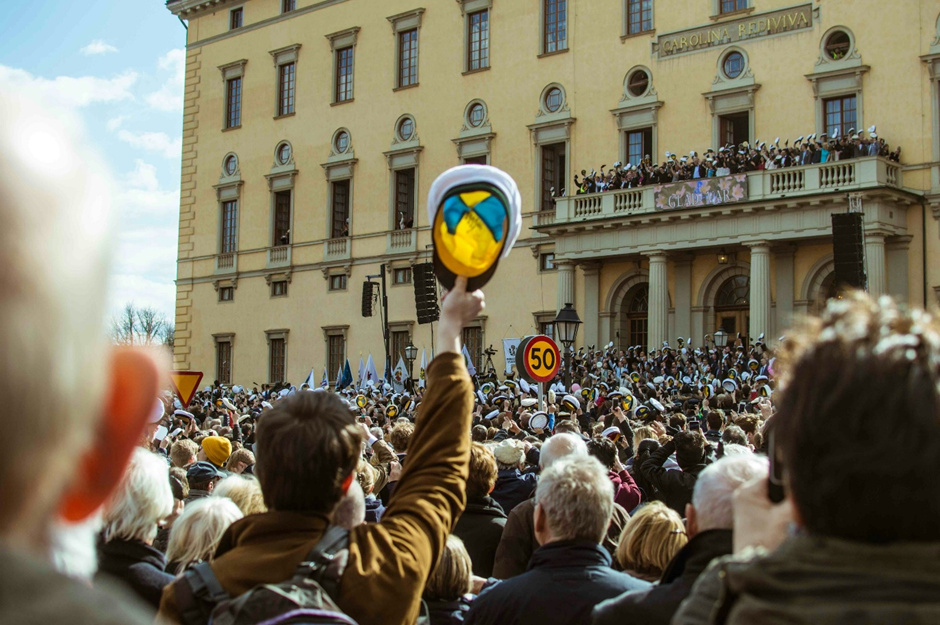
Post-War Left Turn, Social Democrats Rule
Scandinavians looked at those two massive fortunes - the industrial machine, the cultural bedrock - and they thought:" We've made it. We're rich. We're strong. So... maybe we don't have to grind so hard anymore? Maybe we can take all this wealth and build a perfect safety net - one that covers everyone, cradle to grave. Make life easier. More equal. More... happy."
And honestly? You gotta admit - the intention was good. And even noble. Who doesn't want their fellow citizens to live well? Therefore - the fairytale we all know officially went live.
Taxes started climbing. From ten percent of GDP... to twenty... to thirty... to forty... all the way past fifty. The government hired armies of bureaucrats. At its peak, one out of every three Swedish workers were on the government payroll. One, in, three. Let that number sit with you for a moment. Unemployment benefits. Childcare subsidies. Housing allowances. Free university. Free healthcare. An all-encompassing safety net was woven. Thick, warm, and seemingly indestructible.

Tax burden
And in the beginning? It looked fantastic.
Why? Because the inheritance was too abundant. Small population, massive industrial base, generations of accumulated capital. It's like a trust-fund heir who inherits a billion dollars and starts living large. For the first few years - maybe even the first decade - you won't see a single crack. It’s still glamorous. Still generous. Still the life of the party.

Champagne golden celebration
That was Scandinavia in the sixties and seventies. The old industrial engine kept humming. The older generation - the ones who still carried that Protestant - in their bellies — kept producing, kept innovating. Meanwhile, the welfare system worked like a giant pump: sucking wealth up from the productive economy, then spraying it evenly across the whole society.
And for a shining moment, it all seemed to work. Growth was steady. Welfare was generous. And tensions melt away.
It was the absolute peak of the Nordic fairytale.
But.
You knew that "but" was coming, didn't you?
Here's the thing about viruses. They don't announce themselves. They work silently, inside the host, replicating, spreading - and by the time the symptoms show up, the damage is already done.

Any system that takes away what people earn through power - that's what high taxation is; and any system that replaces voluntary human cooperation with top-down state machinery - that's what compulsory welfare does; will slowly, invisibly, eat away at two things: economic vitality and Moral consensus.
You won't see it at first. There's too much fat on the bones. Too much inherited wealth to burn through.
But by the late seventies, the early eighties - the fever had arrived.
Symptom number one: the muscles start wasting away.
Economists had a name for it. They called it "the Swedish Disease”.
And the logic was brutally simple. You bust your back to build a company. You earn a hundred dollars. The government takes seventy. Maybe eighty. So, tell me - where's the incentive to keep going? To take risks? To push harder?
For a lot of entrepreneurs, the answer was: there is none.
Some gave up. Some stopped growing their businesses. And some - the smartest ones - simply left.

Abadoned factory
Ingvar Kamprad, the man who built IKEA from a tiny mail-order catalog in the Swedish countryside - he packed his bags and moved to Switzerland. Lived there for decades. Just to keep what he'd earned.
Tetra Pak moved its headquarters out, too. One by one, the towering trees that had built Sweden's glory either stopped growing - or got uprooted entirely.
And it wasn't just the entrepreneurs. Regular workers started doing the math too. When a month of hard work puts roughly the same amount in your pocket as a generous unemployment check... why bother? Welfare dependency became a real, measurable social problem. People gamed the system. Called in sick when they weren't. Stretched benefits as far as they'd go. The government was paying - so why not?
The whole society's economic muscle began to atrophy. The former growth champion became a sluggish also-ran. New world-class companies? They just... stopped appearing. The entire economy felt like it was wrapped in a thick, warm and airtight blanket - cozy, comfortable, but slowly suffocating.
Symptom number two: the culture starts rotting from the inside.
And this one - this one is quieter than the first. But far more deadly.
Remember that old Protestant ethic? Work is a sacred calling? Your life is your responsibility? That mindset - the mindset that built the Nordic miracle - started fading in the younger generations.
And why wouldn't it? These kids were born inside the welfare cocoon. From the moment they opened their eyes, the state was there. Feeding them. Educating them. Catching them when they fell. They never knew the gym. They never had to build their own muscle.

Generational Decline
Therefore - asking the government for help wasn't embarrassing anymore. It was a birthright. The old values of self-reliance and personal responsibility? Replaced, slowly but surely, by a new creed: the state owes me.
Think of it like a family dynasty. The grandfather - first generation - was a diligent, self-made man. Built everything from nothing. The father - second generation - watched the struggle, understood the sacrifice, and still carried some of that fire. But the grandchildren? Third generation? They were born on top of the mountain. They thought the money just... appeared. Automatically. Like Wi-Fi. They couldn't fathom what it took to build the fortune they were spending.

Three-Generation Decline, Spiritual Entropy
That - that generational decay, that slow increase in spiritual entropy - is exactly what happened to Nordic society.
And here's our second big conclusion:
The Nordic model is not a growth engine. It's a consumption engine.
It doesn't create wealth. It burns wealth. Generation after generation, it consumes the material capital and cultural capital that were stockpiled in the pre-welfare era.
Picture a luxury car with a full tank of gas - roaring down the highway in the sixties, looking absolutely magnificent. But drive long enough and you notice something terrifying: the engine doesn't make fuel. It only burns it. And the fuel gauge? It's dropping. Fast.

Empty gas tank
By the early nineties, the tank was nearly empty.
Sweden experienced a crisis.
Unemployment spiked. The government's books turned blood red. The currency nosedived. For the first time, that beautiful, gleaming fairytale showed its teeth.

Financial crisis
CHAPTER VI - ACTIONS SPEAK LOUDER THAN WORDS
So, what happened next? What did the Swedish government do when the fairytale started crumbling?
They did exactly what you'd expect someone to do when reality punches them in the face.
They reversed course.
Quietly. Reluctantly. But unmistakably.
Tax cuts - big ones. Corporate taxes slashed. Capital gains taxes lowered. The message to entrepreneurs? "Please come back. We need you."

Tax cut
Privatization. State-owned companies - sold off. Market competition - invited back in.
Deregulation. In pensions. In healthcare. And in education. Sweden became one of the first countries on Earth to adopt a school voucher system - parents could take government funding and choose freely between public and private schools.

Education freedom celebration
Now - here's the delicious irony.
While the politicians kept talking about the glories of the welfare state... their actions were marching steadily in the opposite direction. Toward the free market. Toward the very principles they'd spent decades dismantling.
Their mouths said one thing. Their feet walked another way.
Therefore, - the Nordic countries you see today? They're not the Nordic countries of the fairytale golden age. Not even close. What you're looking at is a patched-up version. A system that's been quietly, continuously correcting its own mistakes.
The reason it hasn't collapsed isn't because the original model was sound. It's because they betrayed that model. They loosened the chains. They let the market breathe again - just enough to keep the patient alive.
EPILOGUE — A THREE-ACT PLAY
So. Let's step back. Way back.
What have we actually done here? We took a movie that everyone had only seen as a short film, carefully edited trailer - all highlight reels, all warm lighting - and we watched the whole thing. Director's cut. Deleted scenes included.
And now, with the full picture in front of us, the story reveals itself as a three-act play.

Three act play
Act One: Freedom. A century of free markets, low taxes, and fierce competition. That's what made the Nordic countries rich. That was the real origin story.
Act Two: Consumption. The welfare state - a grand, expensive, well-intentioned experiment - burned through the inherited wealth and eroded the traditional culture, year after year, generation after generation.
Act Three: Correction. After slamming into the wall, a quiet, reluctant retreat back toward market principles.
That's the real plot. Beginning, middle, and... well, we're still in the middle of Act Three. The ending hasn't been written yet.
So - the next time someone tries to sell you that flawless Nordic fairytale, you'll know what to say.
You can look them in the eye, smile, and say:
"Friend - that fairytale you're telling? It's a fragment. A highlight reel. It skips the most important backstory and hides the deepest cracks. It trades one generation's comfort for the next generation's future".
Because here's the truth - and it's not complicated, it's just uncomfortable:
There is no paradise on earth. There is no magic formula. There is no system so clever that it can outsmart the basic rules of economics and human nature.
No Paradise, No Shortcuts
Every free lunch has a hidden bill. Every safety net has a weight limit. Every shortcut has a cost - it's just a question of who pays, and when.
Debunking this fairytale isn't about nitpicking. It's not about tearing down what the Nordic people have built. They've built remarkable things. But the lesson - the real, honest, hard-won lesson - is this:
No matter how rich a country gets, no matter how unique its culture, it cannot escape three ancient truths.
Respect the individual.
Protect property.
Encourage voluntary exchange.
Respect Individuals, Protect Property, Voluntary Exchange
Three principles. Simple as gravity. And just as non-negotiable.
Any grand scheme - any utopian blueprint - that tries to replace personal responsibility with state dependency, and free choice with central planning... no matter how beautiful its promises, no matter how noble its intentions...
...will eventually lead somewhere nobody wants to go.
Coming up next: "Taxation - The Gentle Knife". We're going to zoom in on one number - fifty percent - and trace exactly how a tax rate that high, slowly, methodically, almost lovingly... cuts the foundation out from under an entire nation. Economically. Socially. And morally - this is the part most people miss.
Stay with me. This one's going to sting.
Source & Copyright Notice
This article is adapted and translated from the Chinese original with the author’s permission. Translation © 2025 Mr. Y. All translation rights reserved.
You are welcome to share or republish this article on the condition that you provide full attribution to the author and the translator, link back to this article on this website.
Further adaptation please obtain prior written consent by sending email to info@blossomsblog.com .


Comments